Does Seed Cycling Work? An Evidence-Based Honest Answer
- May 1
- 3 min read
Updated: May 10
Direct answer
There is no high-quality randomized evidence that seed cycling balances hormones. The practice — eating flax and pumpkin seeds in the first half of the cycle and sesame and sunflower seeds in the second — is based on theoretical mechanisms that have not been demonstrated in controlled studies. Eating seeds is healthy; the cycle-syncing claim is not supported.
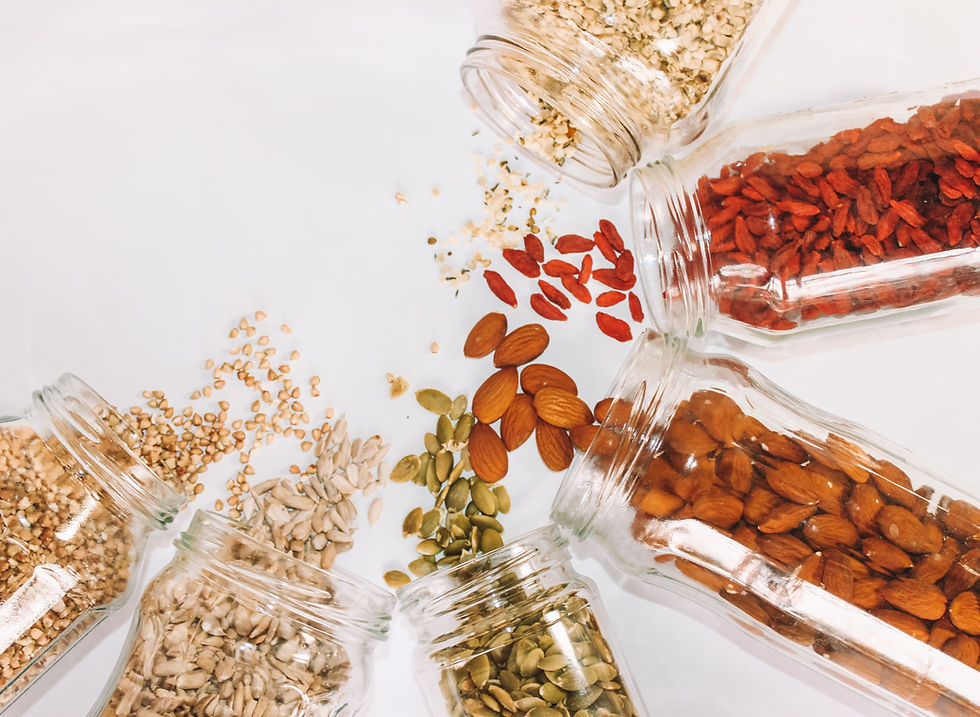
Seed cycling is one of the most-pinned ideas in women's wellness. The protocol: eat one tablespoon each of ground flax and pumpkin seeds daily during the follicular phase (days 1–14), then switch to sesame and sunflower seeds in the luteal phase (days 15–28). Proponents claim this "balances hormones," regulates periods, and eases PMS.
Here is the honest answer.
What the claim is built on
The theoretical mechanism: flax and pumpkin seeds contain phytoestrogens (lignans) and zinc, which proponents say support estrogen in the follicular phase. Sesame and sunflower seeds contain selenium and vitamin E, which proponents say support progesterone in the luteal phase.
This sounds biochemically plausible at first glance. The problem: the doses are tiny, the mechanisms are weakly supported even at therapeutic doses, and no randomized controlled trial has shown that this specific protocol shifts hormone levels or symptoms in real women.
Aviva Romm — a Yale-trained physician and herbalist who is sympathetic to natural medicine — has stated publicly that "the science on seeds does not support the claims that are being made." When the herbalists are skeptical, that tells you something.
What the actual research shows
No RCTs demonstrating seed cycling shifts hormone levels.
No RCTs demonstrating seed cycling improves PMS symptoms beyond placebo.
Some evidence that flaxseed (~10–25g per day) modestly affects estrogen metabolism in postmenopausal women — but this is a different population, a higher dose, and not the seed cycling protocol.
The practice you might call "eating a tablespoon of seeds every day" is fine. Probably good for you, in fact — fiber, healthy fats, magnesium, zinc. But the cycle-syncing element — the switch on day 15, the specific assignment of seeds to phases — is decoration, not medicine.
The free Starter Kit includes a one-pager on the five "cycle syncing" claims that don't hold up — seed cycling included — and what does help instead.
Why the protocol persists anyway
Two honest reasons:
1. People do feel better. They do. But this is mostly a combination of: actually paying attention to their cycle (which itself helps), eating more whole foods, eating more healthy fats and fiber, and the strong placebo effect that any ritual practice produces.
2. It's a sellable kit. Pre-mixed seed jars, monthly subscriptions, "cycle syncing seed boxes" — there's a small economy built on this protocol. That doesn't make it true.
What actually helps with hormonal symptoms
If you have PMS, irregular cycles, or other symptoms you hoped seed cycling would fix, here are interventions with much stronger evidence:
Adequate protein and calories. Underfueling is the single most common driver of menstrual irregularity in women I've seen.
Iron repletion if you have heavy periods.
Vitamin B6, calcium, magnesium for PMS — all have moderate-to-strong evidence (Robinson 2024).
Vitex (chasteberry) for PMS — has small but real RCT evidence, unlike seeds.
Inositol for PCOS — has stronger evidence than most herbal interventions.
Sleep, stress reduction, and resistance training — strong evidence across cycle and metabolic health.
The honest bottom line
Eating seeds is fine. Eating different seeds on different days of your cycle is not magic. If seed cycling makes you feel more connected to your body and your cycle, that has real value — but call it what it is: a ritual, not a treatment. Don't pay €40 a month for a subscription seed jar.
FAQ
Is seed cycling backed by science?
No. There are no randomized controlled trials demonstrating that the seed cycling protocol shifts hormone levels or improves symptoms.
Does seed cycling help with PCOS?
There is no specific evidence for seed cycling in PCOS. Inositol and metformin have much stronger evidence.
Are flax and pumpkin seeds healthy?
Yes — they're nutritious foods, regardless of seed cycling. Eating them daily is fine. Switching them on day 15 is decorative.
Want the honest version?
The Four Quarters Workbook walks through every popular cycle-syncing claim — what holds up, what doesn't, and what to do instead.


Comments